
7/7 🇬🇧
The Day London Burned From Within

This is Part 8 of 20 of my ongoing series covering some of the worst terrorist attacks in modern history and the innocent people whose lives were stolen by this cancer.
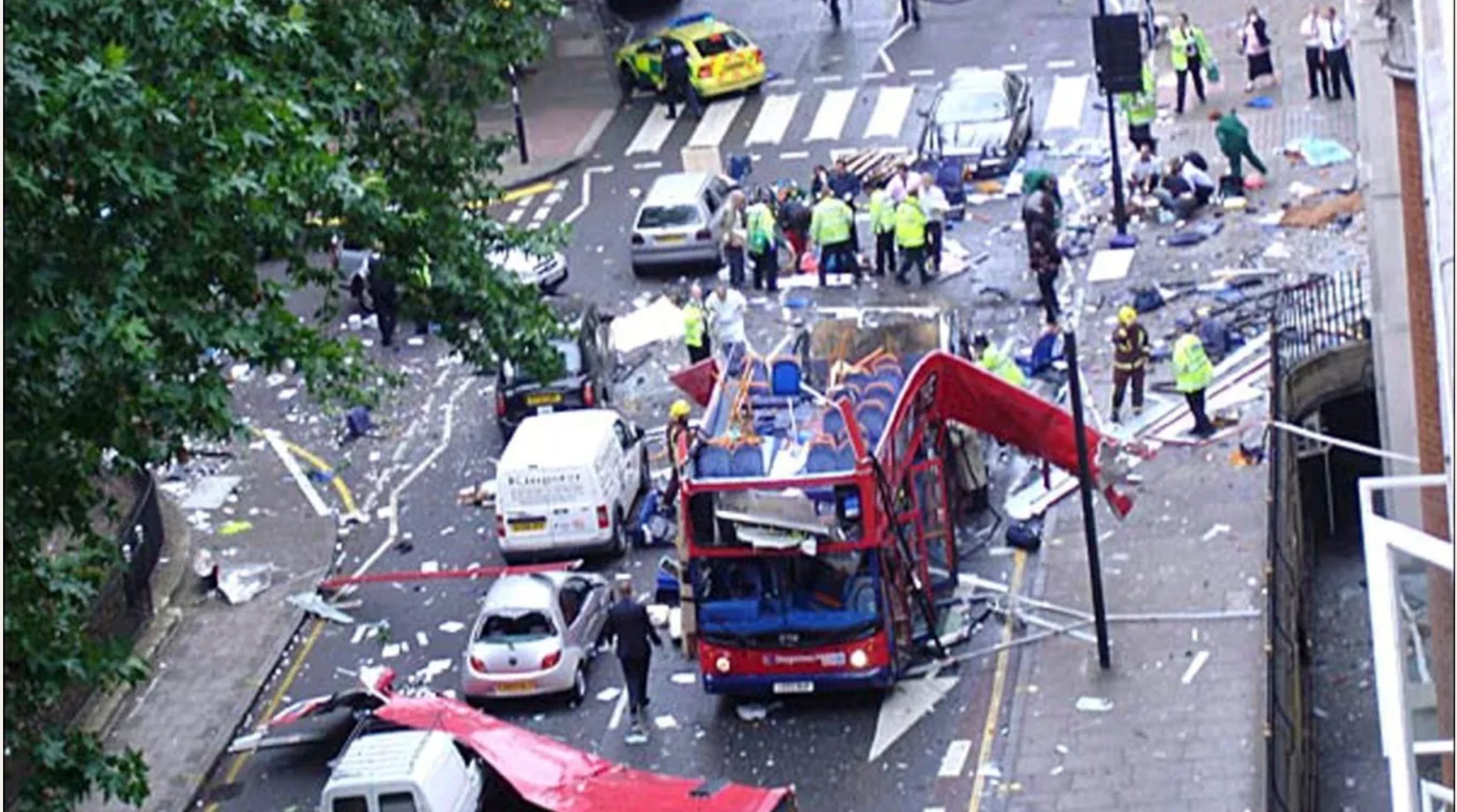
They were not foreign soldiers, not shadowy agents slipped across a border in the night. They were British. They had grown up on British streets, attended British schools, and cheered for British football clubs. Mohammad Siddique Khan was a 30-year-old teaching assistant who worked with special needs children in Leeds. Shehzad Tanweer, 22, was a cricket enthusiast with dyed hair and a charismatic smile. Hasib Hussain, just 19, had struggled as a teenager before finding direction through his faith. Germaine Lindsay, also 19, had converted to Islam after a difficult childhood and was already a father.
To their neighbours, their colleagues, their friends — these men were ordinary. On the morning of July 7, 2005, they boarded trains in London’s rush hour and murdered 52 innocent people.
What made 7/7 so profoundly shocking was not just the scale of the carnage — though that was devastating enough — but the revelation of where it had come from. Britain had spent years bracing for a terrorist attack imported from abroad. What it got instead was something far harder to process: violence that had germinated quietly in its own cities, in its own communities, carried out by its own citizens.
